



Cloud storage email scam, In today’s digital world, cloud services have become an essential part of everyday life. From storing personal photos and important documents to managing business data, cloud storage platforms offer convenience and accessibility. However, with increased reliance on these platforms, cyber criminals have found new opportunities to exploit unsuspecting users. One of the most common and dangerous threats is the cloud storage email scam.
These scams are designed to look legitimate, often mimicking well-known cloud service providers, and they aim to trick users into revealing sensitive information. Unfortunately, many people fall victim to these scams because they appear professional, urgent, and convincing. This article explores everything you need to know about cloud storage email scams, including how they work, common warning signs, real-world examples, and practical steps to stay safe.
What Is a Cloud Storage Email Scam?
A cloud storage email scam is a fraudulent email that pretends to come from a trusted cloud storage service such as Google Drive, Dropbox, iCloud, OneDrive, or similar platforms. The message typically claims that there is an issue with your account, such as storage limits being exceeded, suspicious activity, or shared files waiting for your review.
The main goal of these scams is to manipulate recipients into clicking malicious links or downloading harmful attachments. Once clicked, victims may be redirected to fake login pages or infected with malware. In many cases, attackers steal usernames, passwords, financial information, or even gain full access to cloud accounts.
Why Cloud Storage Scams Are So Effective
Cloud storage services are widely used by individuals and businesses alike. This widespread usage makes them an attractive target for scammers. People are accustomed to receiving notifications about file sharing, account updates, or storage limits, so a fake email doesn’t immediately raise suspicion.
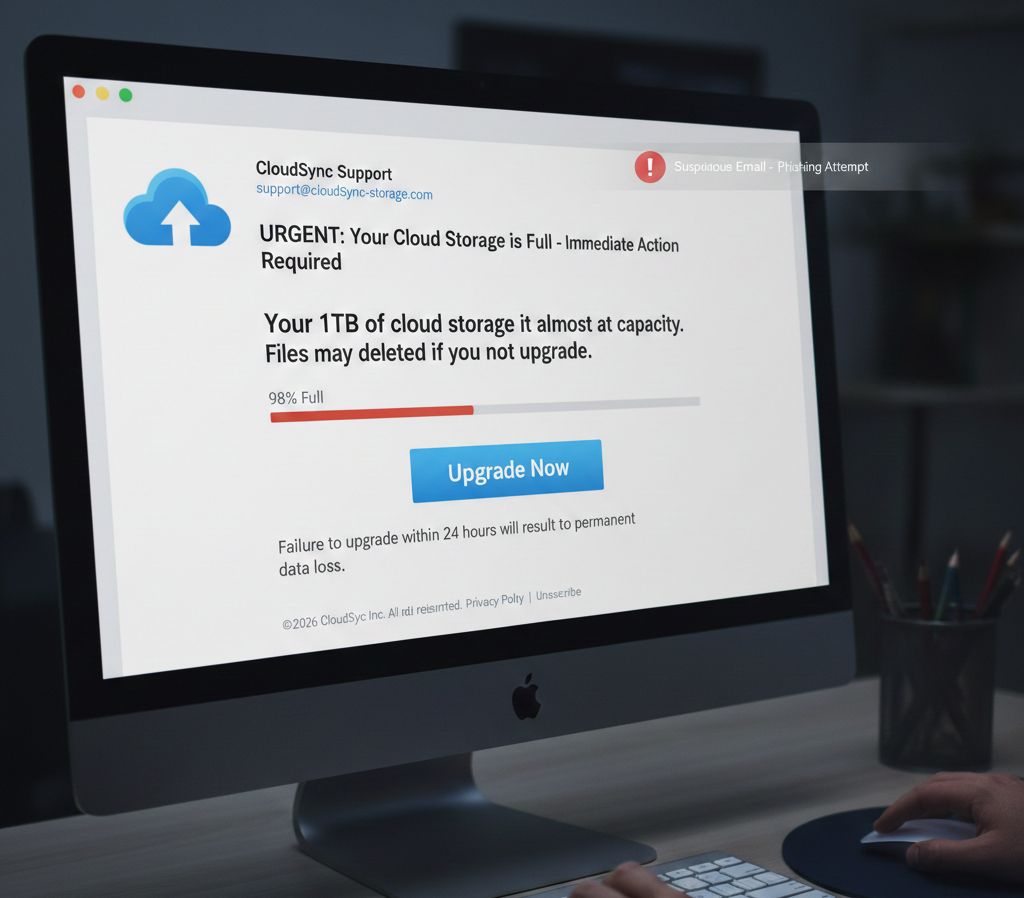
Additionally, scammers often use fear and urgency to pressure users. Messages may warn that files will be deleted, access will be suspended, or unauthorized activity has been detected. When users feel rushed, they are more likely to act without carefully examining the email.
Common Types of Cloud Storage Email Scam Messages
Fake Storage Limit Warnings
One of the most common tactics involves emails claiming that your cloud storage is full or about to expire. The message urges you to “upgrade” or “verify your account” by clicking a link. This link usually leads to a fake website designed to steal your login credentials.
Shared File Notifications
Another popular method is the fake file-sharing alert. The email claims someone has shared an important document or folder with you. When you click the link, you are redirected to a malicious page that looks like a real cloud service login screen.
Security Alert Emails
These messages claim suspicious activity has been detected on your account. They may state that someone logged in from an unfamiliar location or device. To “secure your account,” you are asked to confirm your credentials, which are then captured by scammers.
Payment and Billing Issues
Some emails pretend to be billing notifications, claiming a failed payment or expired subscription. Victims are encouraged to update their payment information, leading to financial theft.
How Scammers Design Convincing Emails
Scammers invest time and effort into making their emails look authentic. They often copy logos, branding, and formatting directly from real cloud storage providers. The sender’s name may appear legitimate, even though the email address itself is suspicious.
They also use professional language and avoid obvious spelling errors, making it harder for users to identify the scam at a glance. In some cases, scammers personalize emails by including the recipient’s name or email address, adding another layer of credibility.
Key Warning Signs of a Cloud Storage Email Scam
Suspicious Sender Address
Always check the sender’s email address carefully. Even if the display name looks legitimate, the actual email address may contain extra characters, misspellings, or unfamiliar domains.
Urgent or Threatening Language
Scammers often rely on fear. Phrases like “Immediate Action Required” or “Your Account Will Be Deleted” are common red flags.
Unexpected Attachments or Links
If you receive an email about a shared file or account issue that you weren’t expecting, be cautious. Hover over links to check where they lead before clicking.
Generic Greetings
Many scam emails use vague greetings such as “Dear User” instead of your real name. While not always a guarantee, this can indicate a mass phishing attempt.
Real-World Examples of Cloud Storage Email Scam Attacks
In recent years, many high-profile scams have targeted users through fake cloud storage notifications. For example, employees at large organizations have received emails appearing to come from internal file-sharing systems. Once credentials were stolen, attackers gained access to sensitive corporate data.
Individual users have also been targeted. Fake Google Drive and iCloud emails have led to stolen photos, personal documents, and even identity theft. These incidents highlight how damaging a single careless click can be.
The Impact of Falling for a Cloud Storage Email Scam
The consequences of falling victim to a cloud storage email scam can be severe. Once attackers gain access to your account, they may steal personal information, delete important files, or use your account to target others.
For businesses, the damage can include data breaches, financial loss, reputational harm, and legal consequences. Even individuals can face long-term problems such as identity theft or unauthorized financial transactions.
How to Protect Yourself from Cloud Storage Email Scams
Verify Before You Click
If you receive an email claiming to be from a cloud storage provider, do not click links immediately. Instead, open a new browser window and log in directly to the official website to check for notifications.
Enable Two-Factor Authentication
Two-factor authentication adds an extra layer of security. Even if scammers obtain your password, they won’t be able to access your account without the second verification step.
Keep Software Updated
Ensure your operating system, browser, and antivirus software are always up to date. Security updates often fix vulnerabilities that scammers exploit.
Educate Yourself and Others
Awareness is one of the strongest defenses. Learn about common scam tactics and share this knowledge with friends, family, and coworkers.
What to Do If You’ve Already Clicked a Scam Link
If you believe you’ve interacted with a cloud storage email scam, act quickly. Change your passwords immediately, especially if you use the same password on multiple platforms. Enable security features such as login alerts and account activity monitoring.
Run a full malware scan on your device to check for infections. If financial information was compromised, contact your bank or payment provider right away. Reporting the incident to the legitimate cloud service provider can also help protect others.
The Role of Cloud Providers in Preventing Email Scams
Major cloud storage companies continuously work to combat scams. They invest in advanced email filtering systems, monitor suspicious activity, and educate users through official security alerts and help centers.
However, no system is perfect. Scammers constantly adapt their methods, which is why user vigilance remains essential. Cloud providers often remind users that they will never ask for passwords via email—a rule worth remembering.
Why These Scams Are Likely to Continue
As long as cloud storage remains a central part of digital life, scammers will continue to exploit it. The growing number of users, combined with increased remote work and online collaboration, creates more opportunities for deception.
New technologies such as artificial intelligence are also being misused by scammers to create more realistic messages. This makes it even more important for users to stay informed and cautious.
Building Safe Digital Habits
Avoiding a cloud storage email scam isn’t just about recognizing fake emails—it’s about building healthy digital habits. Take time to review messages carefully, question anything that feels unusual, and avoid acting out of fear or urgency.
Using strong, unique passwords for each account and managing them with a trusted password manager can significantly reduce risk. Regularly reviewing account activity also helps you catch suspicious behavior early.
Final Thoughts on Cloud Storage Email Scam Awareness
The cloud storage email scam is a serious and evolving threat, but it doesn’t have to be overwhelming. By understanding how these scams work and learning to recognize warning signs, you can protect your data and your peace of mind.
Staying informed, cautious, and proactive is the key to navigating the digital world safely. Cloud storage services are incredibly useful tools, and with the right awareness, you can continue to enjoy their benefits without falling into dangerous traps.
READ MORE: Blogbuzznews.com
