



In the ever-evolving world of digital creation, designers and brands are constantly seeking tools that simplify complex tasks, improve output quality, and streamline workflows. One of the most exciting advancements in this space is reve image 1.0, an AI-powered image generation and editing technology poised to transform how visual content is created. Emerging as a robust engine for producing sharp, stylized images—whether from a text prompt or existing asset—Reve Image 1.0 has quickly become an indispensable ally for creative professionals. When integrated into broader platforms like invideo, it not only elevates static visuals but also connects fluidly with ai video apps, enabling compelling multimedia experiences across channels.
The Creative Evolution: From Manual Editing to AI-Assisted Mastery
Traditionally, crafting high-quality visuals demanded significant technical expertise, time, and artistic skill. Designers would wrestle with layers, lighting, texture, and color manually—often spending hours refining minute details. Brands without in-house creative teams would outsource work, invest in expensive tools, or settle for generic stock imagery due to resource constraints.
Enter Reve Image 1.0—the next generation of AI image generation that bridges imagination and execution with unprecedented precision. Built to interpret nuanced prompts and deliver visually compelling images, this technology reduces creative friction and empowers designers to focus more on strategy and storytelling rather than pixel-perfect technicality.
From concept art and promotional visuals to logo drafts and social media graphics, Reve Image 1.0 excels at converting ideas into polished, ready-to-use images. It’s a powerful ally for designers who value inspiration without compromise and for brands looking to maintain visual consistency across platforms.
How Reve Image 1.0 Works
At its core, Reve Image 1.0 uses advanced AI to understand natural language instructions and transform them into striking visuals. The model has been trained on extensive datasets that allow it to grasp artistic intent, spatial reasoning, lighting, and detail composition with remarkable fidelity. What sets it apart is its high “prompt adherence”—the capacity to faithfully follow even detailed instructions, delivering results that closely align with the creator’s vision.
Unlike many older image generators that struggle with text rendering or lose detail in complex scenes, Reve Image 1.0 delivers sharp output with exceptional handling of color gradients, textures, and object relationships. This means designers can not only generate fresh visuals but also refine existing images with AI-powered edits that preserve subject stability and artistic intention.
Transforming Brand Visual Identity
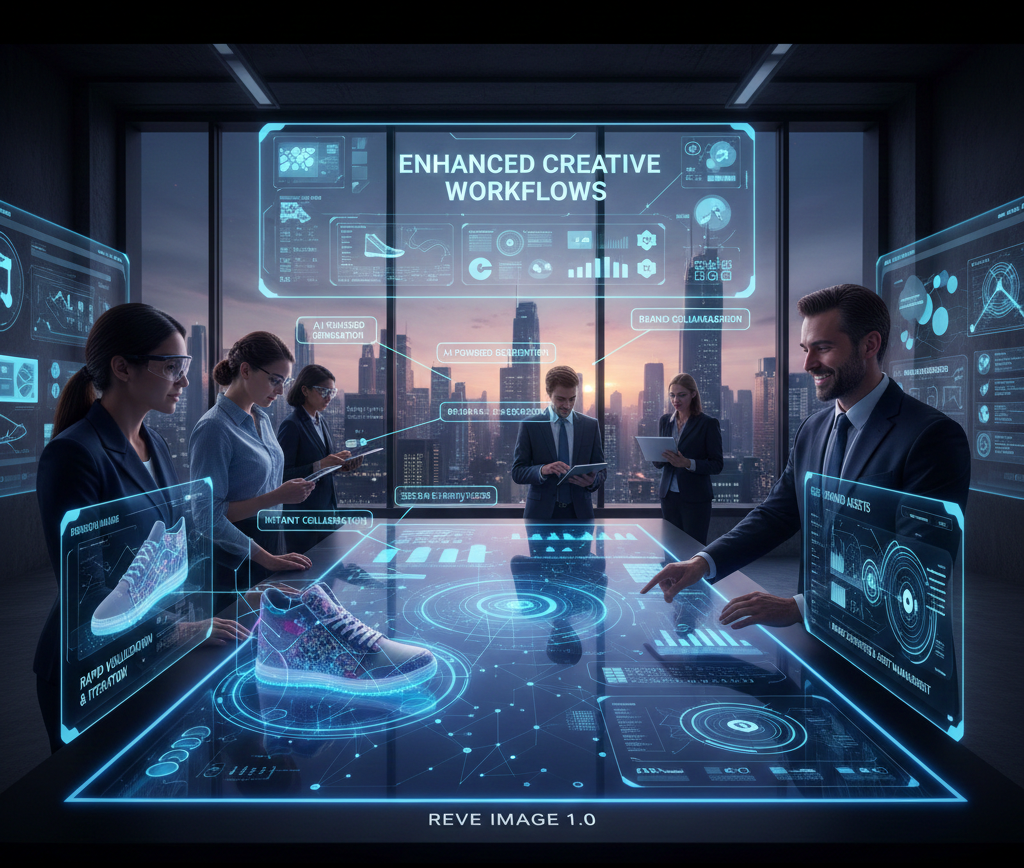
For brands, consistency is everything. Visual identity must remain stable across advertisements, social media posts, packaging, and promotional materials. One of the most significant ways Reve Image 1.0 enhances workflows is by enabling brands to create or adapt visual assets that preserve a unified style and aesthetic.
Consider a fashion label launching a new summer collection. Instead of sourcing varied photography that may clash in tone or style, the creative team can use Reve Image 1.0 to generate visuals in a harmonious aesthetic across all campaign assets. Whether it’s vibrant beach scenes, product close-ups, or lifestyle imagery, the tool ensures color schemes, lighting, and overall visual language align with the brand’s voice.
This capability extends beyond static images. Integrated into platforms like invideo—a suite of ai video apps and creative tools—Reve’s image technology helps brands maintain consistent visual themes even as content transitions into motion. Whether creating dynamic video ads for Instagram, compelling stories for TikTok, or promotional reels for YouTube, the ability to generate matching image visuals ensures that motion and static content feel like parts of a coherent visual ecosystem.
Empowering Designers with Speed and Flexibility
Speed is another transformative advantage offered by Reve Image 1.0. Designers are often challenged by tight deadlines and rapid iteration cycles. Producing multiple versions of a visual concept manually can be painstaking and time-consuming. With Reve Image 1.0, designers can generate high-resolution renders in seconds—branching into different styles, lighting schemes, and compositions without the traditional overhead of manual editing.
The ease of prompt-based creation also invites designers to experiment with creative choices that might otherwise be sidelined due to time constraints. Rather than committing to a single concept and refining it for hours, designers can rapidly explore several visual directions, compare results, and converge on the best solution—all within minutes.
The model’s ability to perform style transfer and maintain scene consistency across multiple edits ensures that each experimental iteration remains anchored to the core subject and brand identity. This fast exploratory capability unlocks greater creative potential and supports agile workflows in fast-paced project environments.
Precision Beyond Basics: Lighting, Textures, and Detail
One of the most compelling aspects of Reve Image 1.0 is its mastery of nuanced visual elements—especially lighting, texture, and scene detail. These are often the hardest aspects to manage manually but are crucial to professional quality design.
Lighting determines mood and depth in imagery. With Reve Image 1.0, creators can instruct the model to apply specific lighting conditions—dramatic shadows, soft highlights, or cinematic warmth—without having to manipulate complex layers or lighting rigs manually.
Texture enhancement means that surfaces like fabric, metal, skin tones, and natural elements exhibit realistic detail that elevates visual quality. Designers no longer need to spend hours refining textures; instead, they can rely on the AI to generate rich, detailed surfaces that resonate with viewers.
Scene detail refers to the overall coherence of the visual—ensuring that foreground subjects are crisp, midground elements complement the composition, and backgrounds retain depth without distraction. Revelations like these are what make Reve Image 1.0 not just a tool for generating images but a mechanism for advancing visual storytelling.
The result is output that feels intentional, refined, and in line with professional design standards—all with minimal manual effort.
Integrating with ai Video Apps for Dynamic Content
While Reve Image 1.0 is fundamentally an image-centric technology, its role within the broader creative tool ecosystem—especially ai video apps—cannot be understated. Modern marketing and content strategies rely heavily on dynamic visual media. Video content consistently outperforms static imagery in engagement and reach across social platforms, and brands that effectively translate their visual identity into motion gain a competitive edge.
When integrated into comprehensive creative platforms like invideo, Reve Image 1.0 plays well with video pipelines. Designers can source AI-generated visuals and seamlessly incorporate them into video projects—adding motion, transitions, and text overlays to assets that already align with their brand’s visual language.
This synergy between image generation and motion graphics tools enables creators to produce cohesive multimedia campaigns with a unified creative direction. Whether launching a product promo, crafting a brand story, or producing social content tailored to multiple platforms, the visual journey remains coherent and visually on-brand—an outcome that traditional workflows struggle to match without significant investment.
Democratizing Creativity
Perhaps one of the most profound impacts of Reve Image 1.0 is its democratizing effect on creativity. High-quality image creation was once the province of trained graphic designers. Now, thanks to intuitive prompt-based AI models, even those without formal design training can produce visually striking images that align with professional standards.
Small businesses, independent creators, and startups with limited budgets can now access next-level creative tools that once required significant investment in software and talent. This levels the playing field, enabling a broader community of innovators to compete visually with established brands and agencies.
The Future of Creative Workflows
As AI technologies like Reve Image 1.0 continue to evolve, the possibilities for creative workflows grow exponentially. From desktop applications to cloud-based platforms and integrations with ai video apps, these tools are redefining what it means to create—and how fast it can happen.
Looking ahead, we can expect even tighter integrations between image generation, video animation, and collaborative creative environments. Real-time editing, style memory for brand consistency, and cross-platform generative assets are just the beginning of a future where AI doesn’t replace human creativity—it amplifies it.
Conclusion
In an era where visual content defines brand perception and drives engagement, tools like Reve Image 1.0 are more than just conveniences—they are strategic assets. By enabling designers and brands to generate sharp, stylized images with enhanced lighting, texture, and scene detail while maintaining subject consistency, this AI model enhances creative workflows across industries. When integrated with ai video apps and broader content platforms, Reve Image 1.0 empowers creators of all skill levels to produce professional-grade work faster, more consistently, and with greater creative freedom.
If you’re a designer aiming to push creative boundaries or a brand looking to amplify your visual storytelling, embracing AI-driven tools like Reve Image 1.0 isn’t just smart—it’s essential for staying competitive in today’s visual economy.
