



Wireless charging has quietly become a standard feature in modern smartphones, earbuds, smartwatches, and even electric vehicles. You place your device on a charging pad, and—almost magically—it begins to charge without any cables. Simple, clean, and convenient.
But there’s a question many users still ask, often with genuine concern:
Is wireless charging bad for battery health?
You may have heard mixed opinions. Some say Is wireless charging bad for battery damages batteries faster. Others claim it’s completely safe. And then there are people who say it depends on how you use it.
So what’s the real answer?
In this in-depth guide, we’ll break everything down in plain English. We’ll explore how wireless charging works, how batteries degrade over time, what science actually says, and how you can safely use wireless charging without harming your device.
Let’s get started.
Understanding How Wireless Charging Works
To understand whether Is wireless charging bad for battery is harmful or not, we first need to understand how it actually works.
Is wireless charging bad for battery uses a technology called electromagnetic induction. Inside the charging pad is a coil that generates an electromagnetic field. Inside your phone is another coil that receives this energy and converts it back into electricity to charge the battery.
There’s no physical connection, no cable plugging into the phone. Power is transferred through the air over a very short distance.
This method is commonly known as Qi charging, which is the most widely used standard today.
How Smartphone Batteries Age Over Time
Before blaming Is wireless charging bad for battery, it’s important to understand a key truth:
All batteries degrade over time—no matter how you charge them.
Most modern devices use lithium-ion or lithium-polymer batteries. These batteries degrade because of:
- Heat exposure
- Charge cycles (charging from 0% to 100%)
- High voltage stress
- Fast charging stress
- Age (even if unused)
Battery degradation is normal. The goal isn’t to stop it completely—it’s to slow it down.
Why People Think Wireless Charging Is Bad for Batteries
The belief that Is wireless charging bad for battery
batteries comes mainly from three concerns:
- Heat generation
- Slower charging efficiency
- Overcharging fears
Let’s look at each one honestly.
Heat: The Real Enemy of Battery Health
Heat is the number one factor that affects battery lifespan.
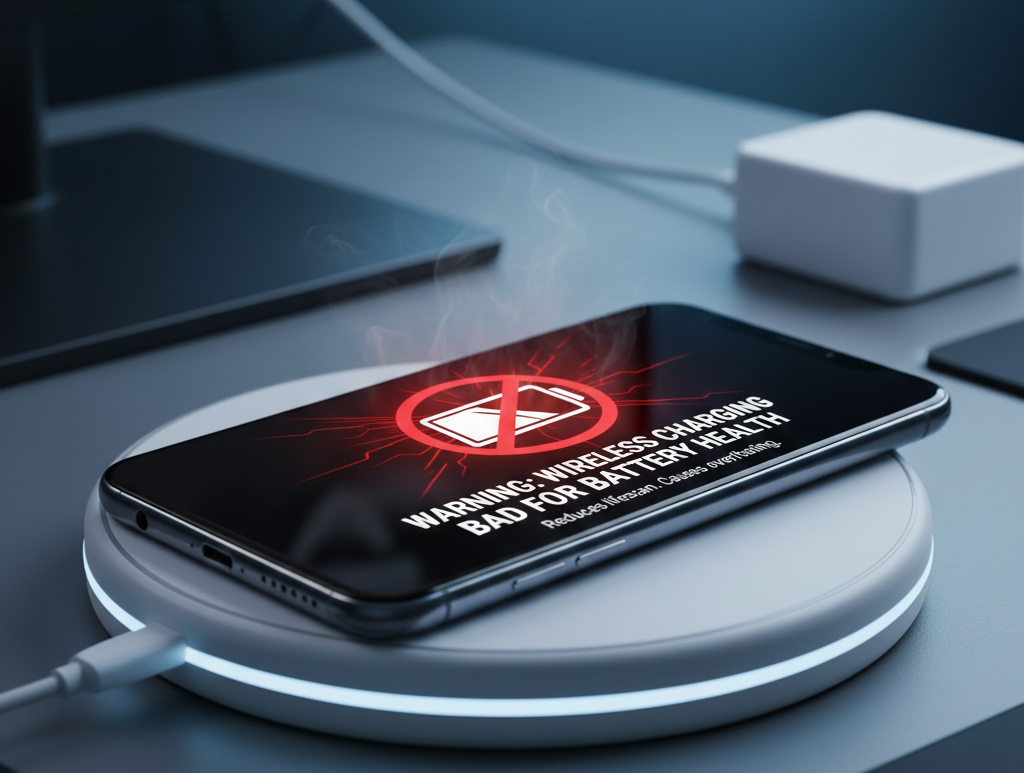
Wireless charging generally produces more heat than wired charging. Why?
- Energy transfer is less efficient
- Misalignment between coils increases resistance
- Thicker phone cases trap warmth
- Fast wireless charging increases temperature
This leads many people to ask again:
Is wireless charging bad for battery because of heat?
The answer is: it can be, but not always.
Is wireless charging bad for battery But Modern devices are designed with temperature sensors. If your phone gets too warm, it automatically slows down or stops charging. This safety mechanism protects the battery from serious damage.
Occasional warmth is normal. Excessive, constant heat is the real problem.
Is wireless charging bad for battery Cause Overcharging?
This is one of the biggest myths.
No, wireless charging does not overcharge your battery.
Modern smartphones stop charging once they reach 100%. They also manage trickle charging intelligently. Whether you’re using a cable or a wireless pad, the phone controls how much power enters the battery.
Overcharging is not a real concern with modern devices
Wireless Charging vs Wired Charging: A Fair Comparison
Is wireless charging bad for battery Let’s compare both methods realistically.
Wired Charging Advantages
- Faster charging speeds
- Less heat in most cases
- Higher energy efficiency
Wired Charging Disadvantages
- Physical wear on charging port
- Cable damage over time
- Risk of loose connections
Wireless Charging Advantages
- No cable wear or port damage
- More convenient for daily use
- Reduced dust and moisture issues
Wireless Charging Disadvantages
- Slightly slower
- Can generate more heat
- Sensitive to alignment
Neither method is perfect. Each has trade-offs.
Is Wireless Charging Bad for Battery in the Long Term?
Is wireless charging bad for battery This is the most important question—and the most honest answer is:
Is wireless charging bad for battery ? not inherently bad for battery health when used correctly.
Battery degradation happens anyway. The difference between careful wired charging and careful wireless charging is usually small.
What really matters is how you charge, not just what you use.
Common Wireless Charging Mistakes That Harm Batteries
Most battery problems blamed on wireless charging are actually caused by user habits.
Here are the most common mistakes:
Using Cheap or Uncertified Chargers
Low-quality pads may lack proper heat control and voltage regulation.
Charging on Soft Surfaces
Beds, couches, and pillows trap heat.
Thick or Metal Phone Cases
These interfere with energy transfer and increase temperature.
Charging in Hot Environments
Heat from the environment plus charging heat accelerates degradation.
Leaving the Phone Misaligned
Poor alignment causes inefficiency and excess warmth.
How to Use Wireless Charging Safely
If you enjoy the convenience of wireless charging, here’s how to protect your battery:
- Use certified charging pads
- Remove thick cases while charging
- Place the charger on a hard, flat surface
- Avoid charging in hot rooms
- Keep your phone properly aligned
- Don’t rely on fast wireless charging all the time
Following these steps dramatically reduces any negative impact.
Fast Wireless Charging: Is It Riskier?
Fast charging—wired or wireless—generates more heat.
Fast wireless charging uses higher power levels, which increases temperature. However, manufacturers include safety systems to manage this.
If you use fast wireless charging occasionally, it’s fine. If you rely on it constantly, battery wear may increase slightly over time.
Moderation is key.
Does Wireless Charging Reduce Battery Capacity Faster?
In real-world testing, the difference is minimal.
Most users replace their phones every 2–4 years. Within that time, the difference in battery health between wired and wireless charging is often barely noticeable.
Extreme usage patterns—not wireless charging itself—cause significant damage.
Wireless Charging and Overnight Charging
Many people place their phone on a wireless pad overnight.
Is this bad?
Not really—if your device supports optimized charging. Modern phones learn your habits and delay charging past 80% until just before you wake up.
However, heat buildup overnight can still be a concern if ventilation is poor.
Using a cooler environment and a quality charger makes overnight wireless charging safe.
Does Wireless Charging Affect Different Devices Differently?
Yes.
- Smartphones: Generally safe with proper usage
- Wireless earbuds: Lower power = minimal risk
- Smartwatches: Designed specifically for wireless charging
- Electric vehicles: Advanced cooling systems manage heat
Device design matters more than the charging method itself.
Scientific Perspective on Wireless Charging Safety
Multiple studies show that battery degradation depends mainly on:
- Temperature
- Charge cycles
- Voltage stress
Wireless charging influences temperature slightly more—but within safe limits for modern devices.
Manufacturers test batteries extensively under wireless charging conditions before releasing products.
Environmental and Convenience Factors
Wireless charging reduces cable waste and port damage. It also encourages consistent charging habits, preventing deep discharges that harm batteries.
Convenience can actually improve battery health when users top up instead of draining to zero.
Should You Avoid Wireless Charging Completely?
No.
Avoiding wireless charging entirely offers little real benefit for most users.
Instead, focus on:
- Temperature management
- Charging habits
- Quality accessories
These factors matter far more than the charging method alone.
Myths About Wireless Charging You Should Ignore
- “Wireless charging kills batteries quickly”
- “It always overheats phones”
- “It overcharges the battery”
- “It’s unsafe for long-term use”
None of these are universally true.
The Real Answer: Is Wireless Charging Bad for Battery?
Let’s be clear and honest:
Wireless charging is not bad for battery health when used responsibly.
It may generate slightly more heat than wired charging, but modern devices are built to handle this safely. Poor habits, low-quality chargers, and excessive heat exposure cause far more damage than wireless charging itself.
For everyday users, the convenience outweighs the minor trade-offs.
Final Thoughts
Battery health isn’t about fear—it’s about understanding.
If you:
- Use good accessories
- Avoid extreme heat
- Charge smartly
- Maintain moderation
You can safely enjoy wireless charging for years without noticeable harm.
Technology evolves, and so do batteries. Wireless charging isn’t the enemy—it’s just another tool. Used wisely, it fits perfectly into modern life.
READ MORE: Blogbuzznews.com
