



The King Soopers strike Colorado became one of the most significant labor movements in the state’s recent history. What began as a dispute between grocery workers and corporate management quickly turned into a statewide conversation about fair wages, healthcare, working conditions, and corporate responsibility. For many Coloradans, this strike was not just about grocery stores—it was about dignity, rising living costs, and the balance of power in modern workplaces.
This article explores the full story behind the strike, its causes, its impact on workers and communities, and what it may mean for the future of labor relations in Colorado and beyond.
Understanding King Soopers and Its Role in Colorado
King Soopers is more than just a grocery chain in Colorado. For decades, it has been a central part of daily life, serving millions of customers and employing thousands of workers across the state. As a subsidiary of Kroger, one of the largest grocery retailers in the United States, King Soopers holds significant economic and social influence.
Many employees view their jobs not as temporary work but as long-term careers. Workers include cashiers, stockers, bakers, meat cutters, pharmacists, and warehouse staff—people who keep stores running smoothly every day. When these workers speak collectively, their voices carry weight.
The Background of the King Soopers Strike Colorado
The roots of the King Soopers strike Colorado can be traced to growing frustration among employees. Over time, workers reported feeling squeezed between increasing workloads and stagnant wages. At the same time, the cost of living in Colorado—especially in cities like Denver, Boulder, and Aurora—continued to rise sharply.
Employees raised concerns such as:
- Wages not keeping pace with inflation
- Expensive healthcare plans with limited coverage
- Chronic understaffing in stores
- Increased pressure and workload following the pandemic
These issues created a growing gap between workers and management, eventually leading to contract negotiations that failed to meet employees’ expectations.
The Role of the Union in the Strike
Most King Soopers workers in Colorado are represented by the United Food and Commercial Workers (UFCW) Local 7. The union played a central role in organizing, communicating, and representing workers during negotiations.
Union leaders argued that while the company remained profitable, frontline workers were struggling to cover basic expenses like rent, food, and healthcare. When talks stalled, the union asked members to vote on whether to authorize a strike.
The result was clear: workers overwhelmingly supported collective action.
Why Workers Walked Out
The decision to strike is never easy. For many employees, missing even a single paycheck can create financial stress. Yet thousands of workers chose to walk out, signaling how serious the situation had become.
Key reasons behind the walkout included:
Wage Concerns
Employees stated that starting wages were too low to attract and retain staff, leading to understaffed stores and burnout. Long-term workers felt their experience was undervalued.
Healthcare Issues
Rising healthcare costs were a major sticking point. Workers argued that affordable healthcare should not be sacrificed, especially for employees who worked full-time hours.
Staffing and Safety
Understaffing became more noticeable during the pandemic. Workers reported unsafe conditions, long shifts, and limited breaks.
Respect and Job Security
Beyond pay and benefits, many employees expressed feeling unheard and disrespected during negotiations.
How the Strike Unfolded Across Colorado
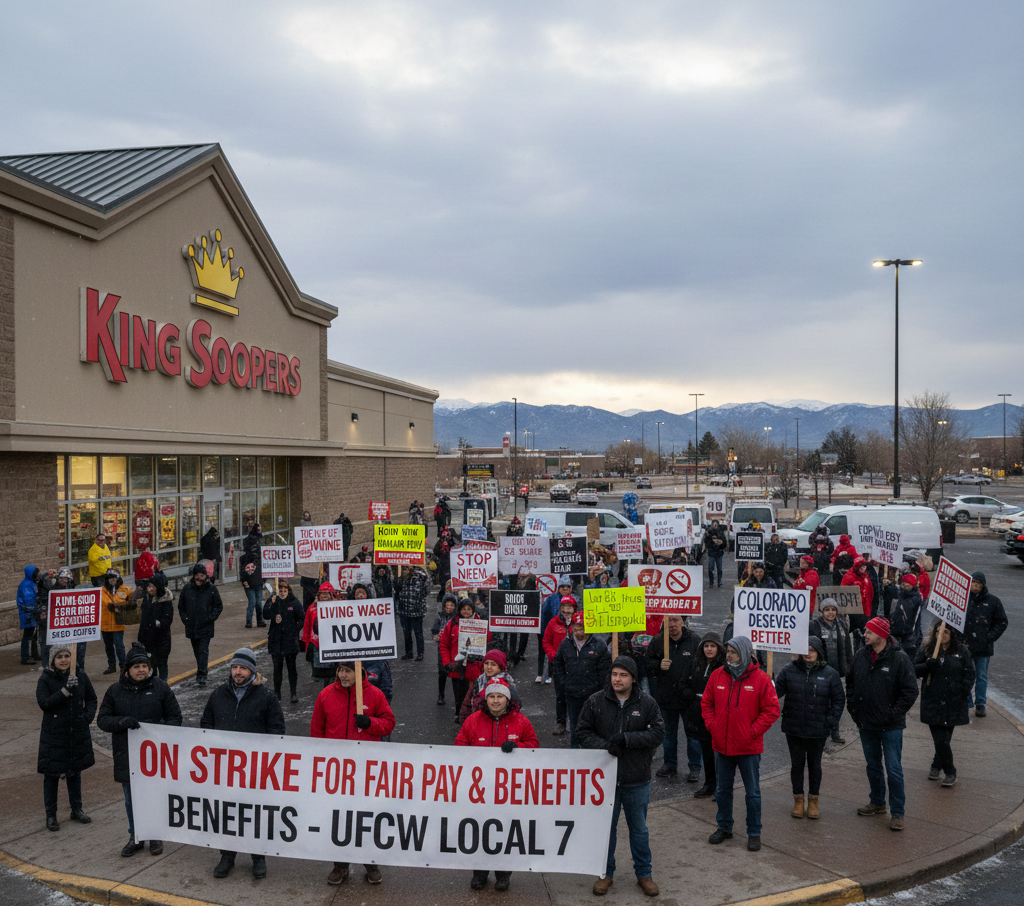
When the King Soopers strike Colorado officially began, picket lines formed outside dozens of stores across the Denver metro area and beyond. Workers stood in cold winter weather, holding signs and chanting for fair treatment.
Customers arriving at stores were met with closed doors or limited operations. Some locations shut down entirely, while others operated with reduced staff.
Despite the hardship, morale among striking workers remained strong, fueled by solidarity and community support.
Community Response to the Strike
One of the most striking aspects of the strike was the reaction from the public. Many Colorado residents expressed support for the workers, refusing to cross picket lines and choosing alternative grocery stores.
Community members showed solidarity by:
- Bringing food and drinks to picketing workers
- Sharing messages of support on social media
- Writing to company leadership urging a fair agreement
For many customers, the strike highlighted how dependent communities are on essential workers who are often underpaid and overworked.
The Company’s Position During the Strike
King Soopers management stated that they had offered a competitive contract, emphasizing wage increases and continued benefits. The company also argued that it needed flexibility to remain competitive in a challenging retail environment.
During the strike, King Soopers hired temporary workers and reassigned managers to keep some stores operating. However, these efforts faced criticism from workers and union representatives, who said they did not address the underlying issues.
Economic Impact of the King Soopers Strike Colorado
The strike had noticeable economic effects across the region. With multiple stores closed or operating at reduced capacity, shoppers turned to competitors, affecting market dynamics.
Local businesses near King Soopers locations also felt the impact. Reduced foot traffic meant fewer customers for nearby shops, cafes, and services.
At the same time, the strike drew attention to the broader issue of wage inequality and the economic pressures facing working families in Colorado.
Media Coverage and Public Discourse
The King Soopers strike Colorado received extensive media coverage, both locally and nationally. News outlets framed the strike as part of a larger trend of labor activism across the United States.
Discussions expanded beyond grocery stores to include topics such as:
- Workers’ rights in essential industries
- Corporate profits versus employee compensation
- The long-term effects of inflation on hourly workers
The strike became a case study in modern labor relations.
Negotiations and the Path to Resolution
After days of picketing and public pressure, negotiations resumed. Both sides faced increasing urgency to reach an agreement.
Workers wanted guarantees that their sacrifices would lead to meaningful change. Management needed to restore normal operations and protect its public image.
Eventually, a tentative agreement was reached, addressing several key worker demands.
What the Final Agreement Meant for Workers
The agreement that ended the King Soopers strike Colorado included improvements that workers viewed as steps in the right direction. While not perfect, the contract reflected the power of collective action.
Key outcomes included:
- Wage increases over the contract period
- Adjustments to healthcare contributions
- Commitments to improved staffing levels
- Protections for long-term employees
For many workers, the agreement validated the risks they took by striking.
Lessons Learned from the Strike
The strike offered valuable lessons for workers, companies, and policymakers alike.
For Workers
Collective action can bring real change, even when the odds seem stacked against employees.
For Employers
Ignoring employee concerns can lead to costly disruptions and long-term reputational damage.
For Communities
Supporting local workers strengthens the social fabric and highlights shared economic challenges.
The Broader Labor Movement Context
The King Soopers strike Colorado did not happen in isolation. Across the country, workers in various industries have become more vocal about pay, benefits, and working conditions.
This strike joined a wave of labor actions that suggest a shift in how workers view their power and role in the economy
How the Strike Changed Public Perception
Many customers reported seeing grocery workers differently after the strike. What was once considered routine labor became recognized as essential, skilled, and demanding work.
The strike humanized the people behind the checkout counters and stock shelves.
Long-Term Effects on King Soopers
While stores eventually reopened, the impact of the strike lingered. Management faced increased scrutiny, and workers became more aware of their collective strength.
Future negotiations are likely to be shaped by the memory of this strike and the precedent it set.
The Human Side of the Strike
Behind every picket sign was a personal story—parents trying to support families, students balancing work and school, and long-term employees who had dedicated years to the company.
For many, the strike was not just about money. It was about being seen, heard, and valued.
What This Means for Colorado’s Workforce
The King Soopers strike Colorado served as a reminder that labor issues are deeply connected to housing costs, healthcare access, and economic stability.
As Colorado continues to grow, these challenges will remain central to discussions about work and quality of life.
Looking Ahead: The Future of Grocery Workers
The grocery industry is changing, with automation, online shopping, and shifting consumer habits. Yet the need for human labor remains strong.
The strike showed that workers want a future where progress includes them, not leaves them behind.
Final Thoughts on the King Soopers Strike Colorado
The King Soopers strike Colorado was more than a labor dispute—it was a moment that captured the tension between corporate growth and worker well-being. It demonstrated that when workers stand together, they can influence outcomes and spark broader conversations.
For Colorado, the strike will be remembered as a turning point that highlighted the value of essential workers and the importance of fairness in the workplace.
READ MORE: Blogbuzznews.com
